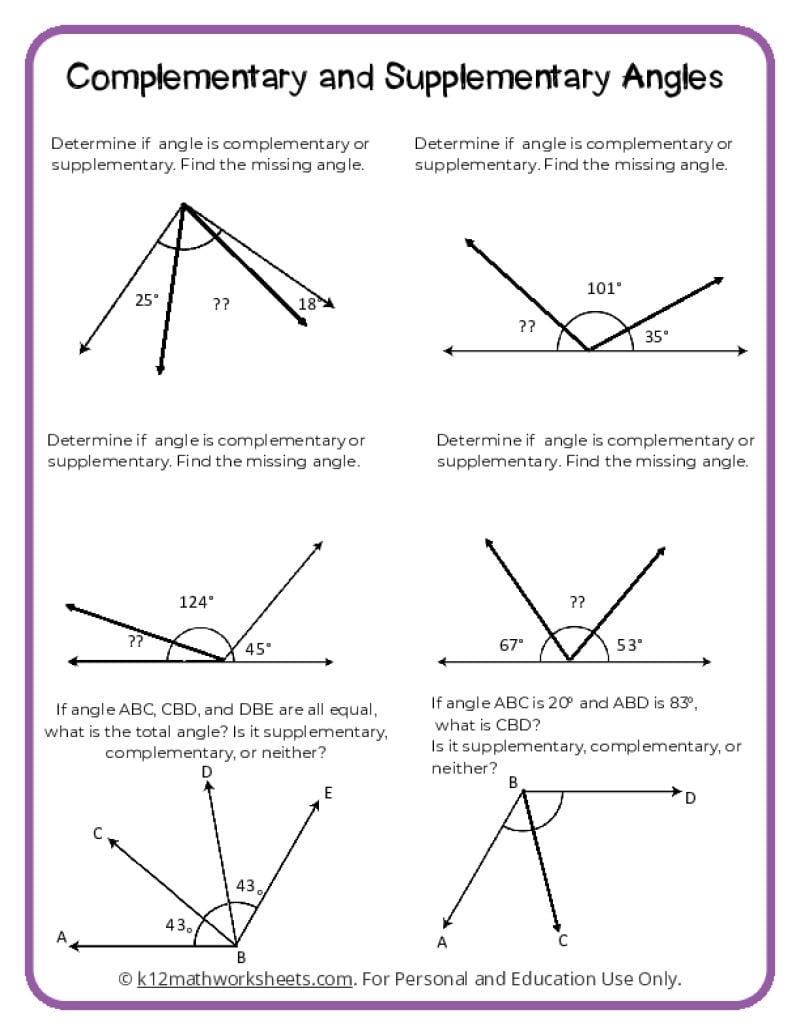
Understanding complementary and supplementary angles is an essential part of geometry. Complementary angles add up to 90 degrees, while supplementary angles add up to 180 degrees. By practicing with worksheets that focus on these concepts, students can gain a better understanding of angle relationships and improve their problem-solving skills.
Worksheets on complementary and supplementary angles often include problems that require students to find the missing angle in a pair of angles that form a complementary or supplementary relationship. These exercises help students apply the rules of angle addition and subtraction to solve for unknown angles and develop their reasoning abilities.
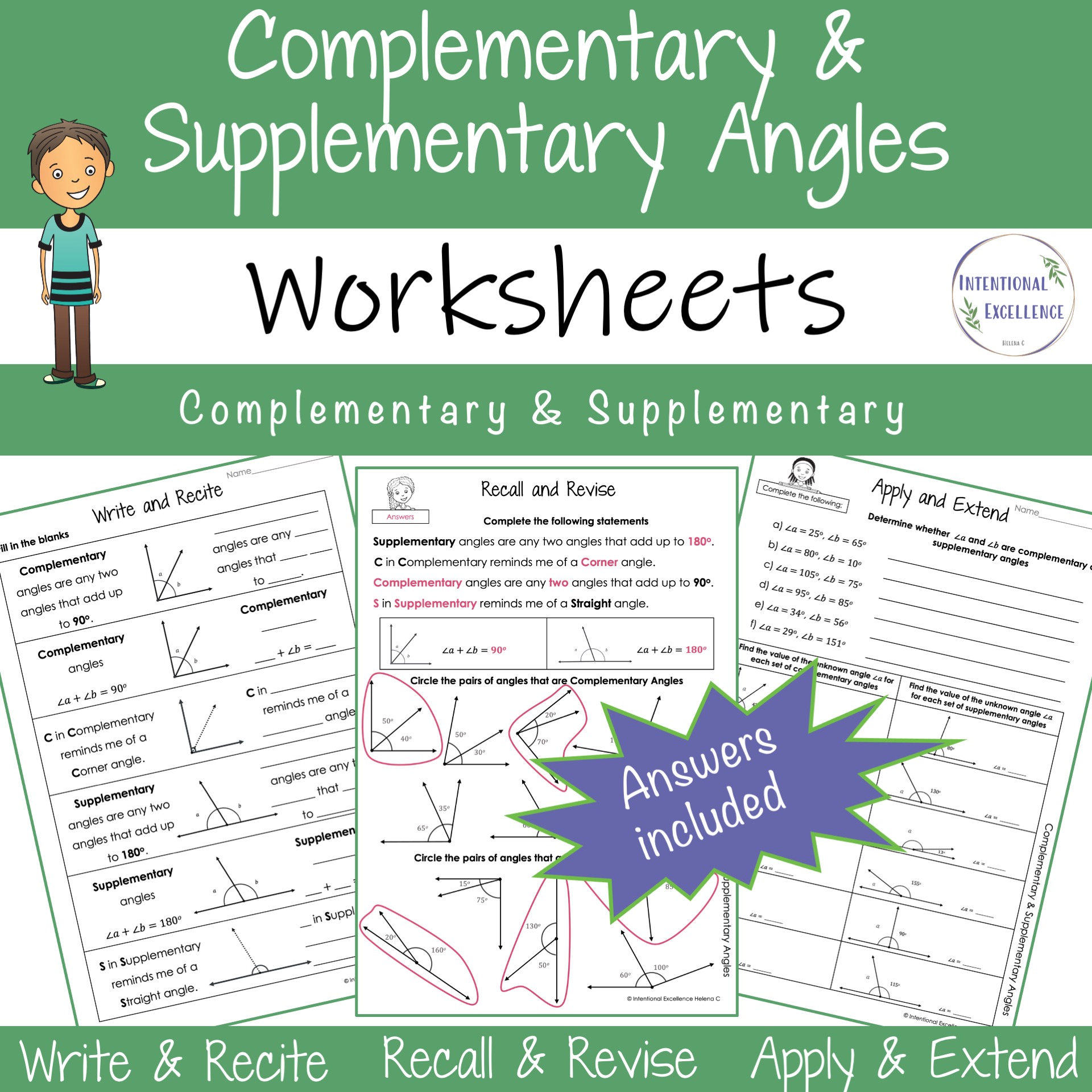 Worksheet Complementary And Supplementary Angles
Examples of Worksheet Problems
One common type of problem on a worksheet about complementary angles might ask students to find the measure of one angle when given the measure of its complement. For example, if one angle measures 30 degrees, students would need to determine the measure of the complementary angle that adds up to 90 degrees.
Similarly, a worksheet on supplementary angles might present a scenario where students are given the measure of one angle in a pair of supplementary angles and asked to find the measure of the other angle. This type of problem helps students practice applying the concept of supplementary angles in different contexts.
Another type of problem that could be included on a worksheet about complementary and supplementary angles is one that challenges students to identify whether a pair of angles is complementary or supplementary based on their measures. This type of exercise helps students develop their ability to recognize angle relationships and apply the correct terminology to describe them.
By working through worksheets on complementary and supplementary angles, students can reinforce their understanding of these concepts and improve their ability to solve angle-related problems. These exercises provide valuable practice that can enhance students’ geometry skills and prepare them for more advanced topics in mathematics.
In conclusion, worksheets focusing on complementary and supplementary angles are valuable tools for helping students grasp the relationships between angles and develop their problem-solving abilities. By practicing with these worksheets, students can build a strong foundation in geometry and become more proficient in working with angles.