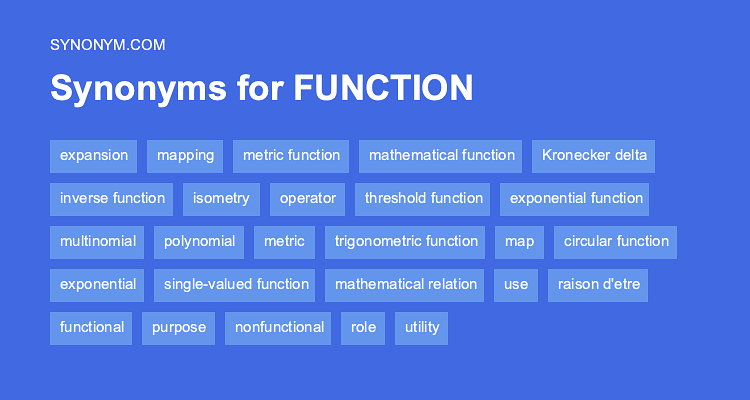
Functions play a crucial role in mathematics, computer science, and various other fields. They are essentially rules that take an input and produce an output. However, there are various terms that can be used interchangeably with functions, each highlighting a slightly different aspect of the concept.
Understanding these synonyms can help expand your knowledge and make it easier to grasp the different perspectives of functions in different contexts.
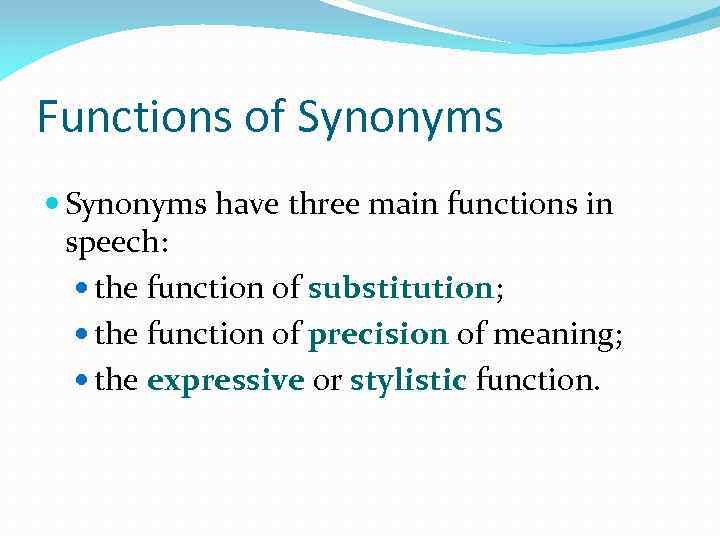 Synonyms Of Functions
1. Mappings: In mathematical terms, a function can also be referred to as a mapping. This term emphasizes the relationship between input and output, where each input is associated with a unique output. Mappings are often represented using arrows or diagrams to visually depict the relationship between elements.
2. Transformations: In geometry and linear algebra, functions are sometimes called transformations. This term highlights the way in which a function can change or “transform” a set of points or objects. Transformations can include rotations, translations, reflections, and dilations, among others.
3. Operators: In computer science and programming, functions are commonly referred to as operators. Operators are symbols or keywords that perform specific actions on one or more operands. These actions can include arithmetic operations, logical comparisons, or other manipulations of data.
4. Procedures: In the context of programming, functions can also be known as procedures. This term emphasizes the structured set of instructions that a function carries out when called. Procedures can be defined once and then executed multiple times throughout a program.
5. Subroutines: Another synonym for functions in programming is subroutines. Like procedures, subroutines are reusable blocks of code that can be called from various parts of a program. Subroutines help in organizing code and reducing redundancy by encapsulating specific tasks.
Overall, understanding the synonyms of functions can provide a more comprehensive view of how functions are used and interpreted in different disciplines. Whether you are working on mathematical proofs, computer programs, or scientific models, recognizing these alternate terms can enhance your understanding and communication within the field.