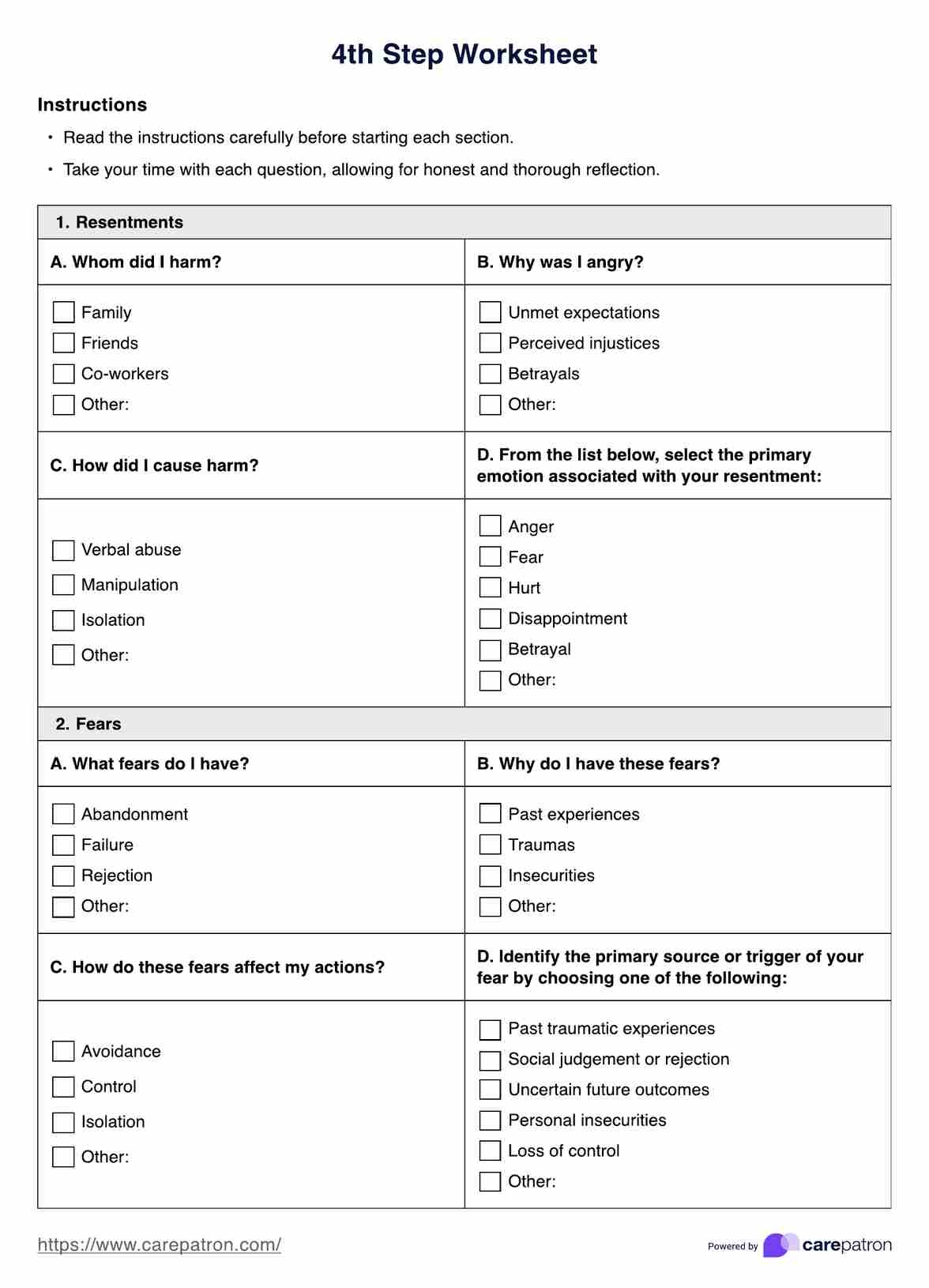
One crucial step in the recovery process for individuals struggling with addiction is the completion of a 4th Step Inventory Worksheet. This worksheet is a tool used in 12-step programs, such as Alcoholics Anonymous and Narcotics Anonymous, to help individuals take a fearless moral inventory of themselves. It provides a structured approach for individuals to examine their past actions, behaviors, and beliefs, ultimately leading to self-reflection and personal growth.
When completing a 4th Step Inventory Worksheet, individuals are encouraged to honestly and thoroughly examine their resentments, fears, and harmful behaviors. By identifying these negative patterns, individuals can begin to understand the underlying causes of their addiction and work towards resolving past traumas or conflicts. This process of self-discovery is crucial in breaking the cycle of addiction and fostering long-term recovery.
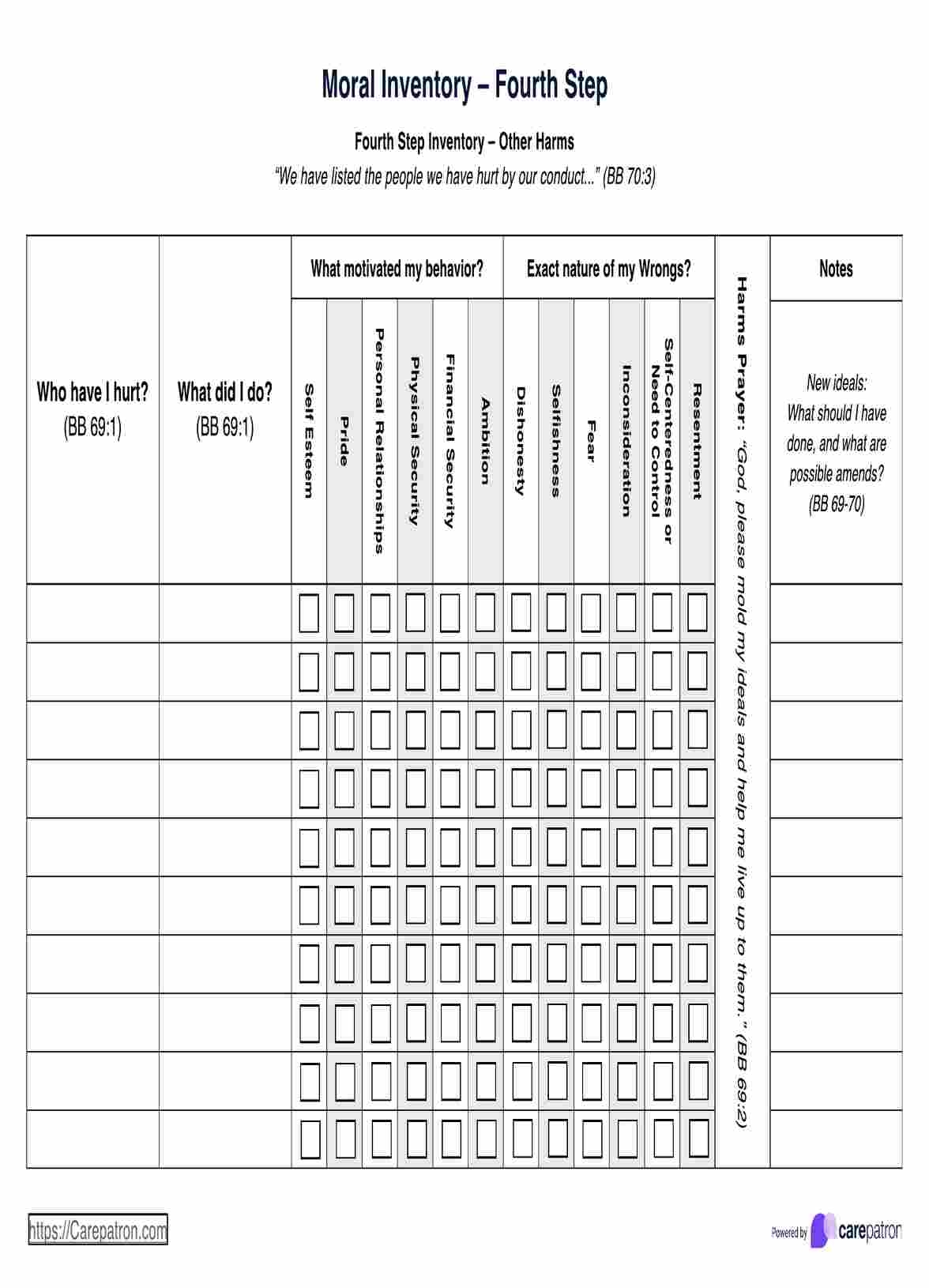 4th Step Inventory Worksheet
4th Step Inventory Worksheet
The 4th Step Inventory Worksheet typically consists of several columns or sections that prompt individuals to list people they resent, the reasons for their resentments, how these resentments have affected them, and their own role in the situation. Additionally, individuals are asked to identify their fears and the ways in which they have harmed others. By completing this worksheet, individuals gain insight into their patterns of behavior and can begin to make amends for past wrongs.
One of the key benefits of using a 4th Step Inventory Worksheet is that it provides a structured framework for individuals to navigate the complex emotions and experiences that often accompany addiction. By breaking down their inventory into manageable sections, individuals can address each issue in a systematic and thorough manner. This process can be both challenging and rewarding, as individuals confront difficult truths about themselves and begin the process of healing and transformation.
In conclusion, the 4th Step Inventory Worksheet is a valuable tool for individuals in recovery to examine their past actions, behaviors, and beliefs. By taking a fearless moral inventory of themselves, individuals can gain insight into the root causes of their addiction and work towards personal growth and healing. This structured approach to self-reflection is essential in breaking the cycle of addiction and building a foundation for long-term recovery.