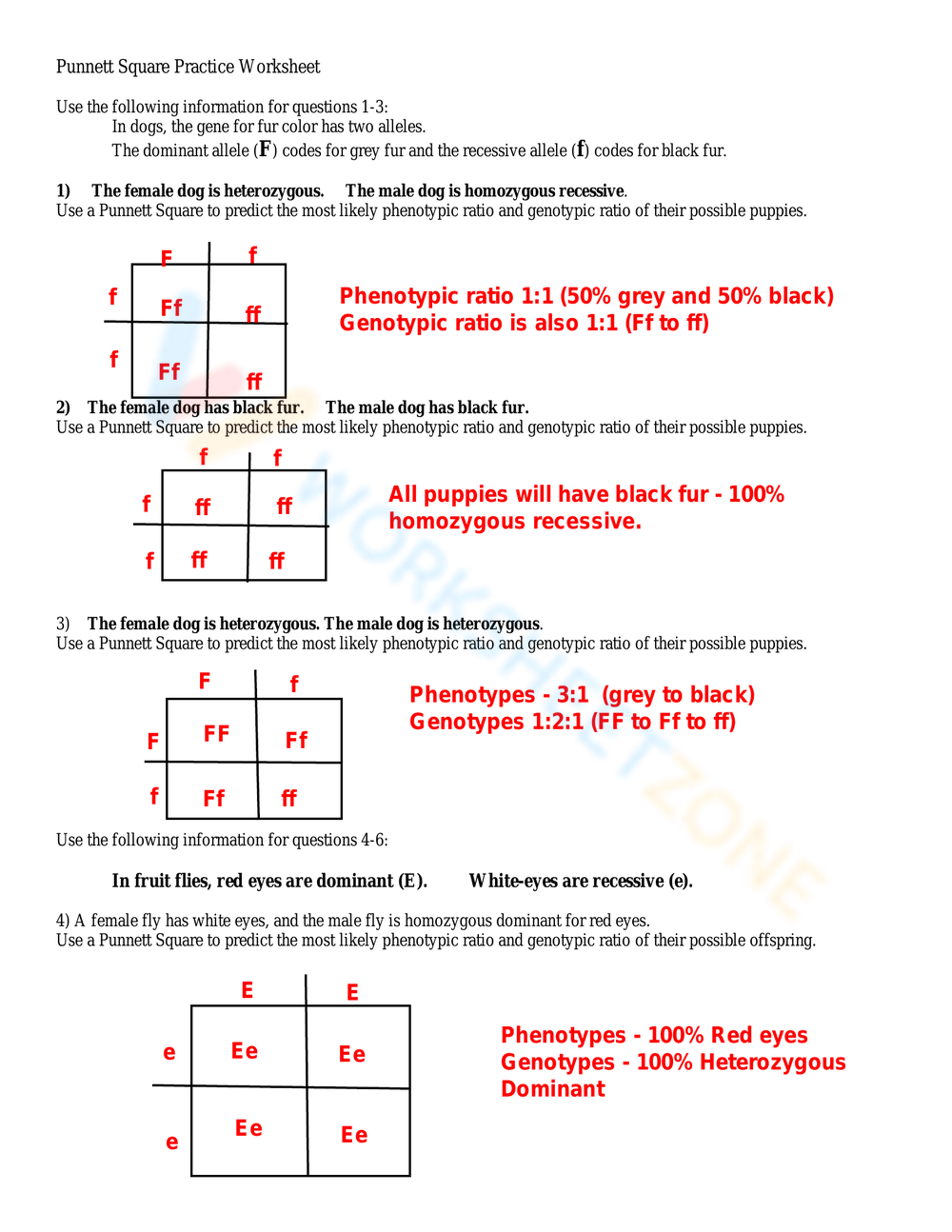
Understanding genetics and inheritance patterns can be a challenging concept for students to grasp. Punnett squares are a helpful tool used in biology to predict the outcome of genetic crosses between two organisms. By practicing with Punnett square worksheets, students can solidify their understanding of genetic inheritance and improve their problem-solving skills in genetics.
Students can use Punnett square practice worksheets to explore the different possible combinations of alleles that can result from a genetic cross. These worksheets typically provide scenarios where students are given the genotypes of two parent organisms and are asked to predict the genotypes and phenotypes of their offspring. By working through these scenarios, students can learn how to set up Punnett squares and determine the probabilities of specific traits being passed down.
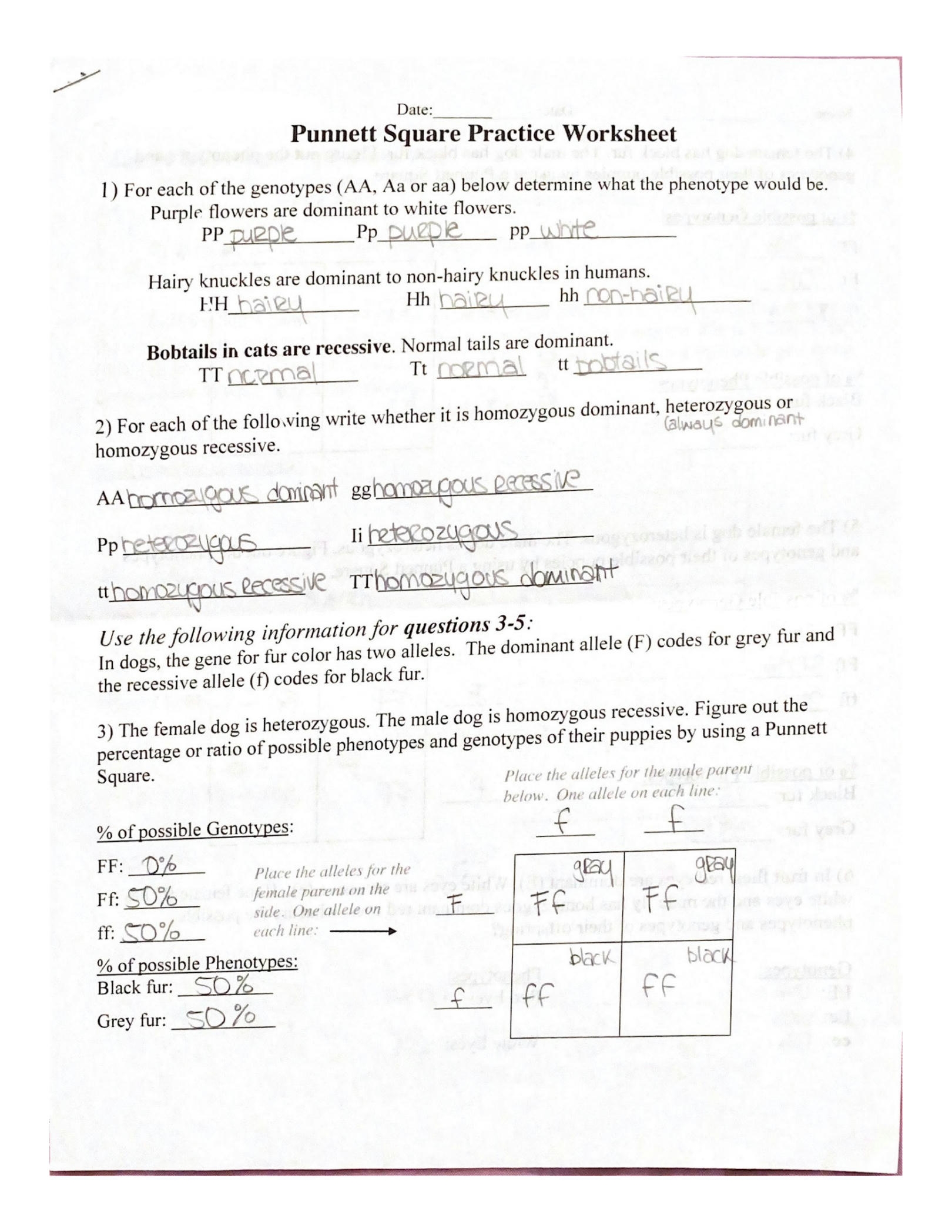 Punnett Square Practice Worksheet
One common type of Punnett square practice worksheet involves predicting the outcomes of simple Mendelian genetics crosses, such as those involving dominant and recessive traits. Students may be asked to predict the genotypes and phenotypes of offspring for traits like eye color, hair color, or seed shape. By completing these practice problems, students can gain a better understanding of how dominant and recessive alleles interact and how they are passed down from one generation to the next.
Another type of Punnett square practice worksheet may involve more complex genetic crosses, such as those involving multiple alleles or incomplete dominance. These scenarios require students to consider the interactions of multiple alleles and how they influence the expression of traits in offspring. By working through these more challenging problems, students can deepen their understanding of genetic inheritance patterns and develop their critical thinking skills in genetics.
Overall, Punnett square practice worksheets are a valuable tool for students to reinforce their understanding of genetic inheritance and improve their problem-solving skills in genetics. By practicing with these worksheets, students can gain confidence in setting up Punnett squares, predicting the outcomes of genetic crosses, and interpreting the results. With continued practice, students can become more proficient in applying their knowledge of genetics to solve complex genetic problems and better understand the principles of inheritance.
In conclusion, Punnett square practice worksheets are an essential resource for students studying genetics. By using these worksheets, students can enhance their understanding of genetic inheritance patterns and develop their problem-solving skills in genetics. Through practice and repetition, students can improve their ability to predict the outcomes of genetic crosses and gain a deeper appreciation for the complexities of genetic inheritance.